
The Exit Interview with Essence Iman
What if the smartest career move you could make is quitting while you're winning?

Raise your hand if you’ve built something successful, or you’re in the “perfect” job—the one everyone tells you they'd kill for... and you still want out.
You’re not failing and nothing is particularly wrong. In some cases, things couldn’t be going better.
You just don’t want to do it anymore.
Dear Accomplished But Deeply Unsatisfied, this is a safe space for you.
It can be a strange and lonely spot to land in. Failure at least makes sense to people. You can explain a failure (even if you might not want to). But try explaining that you want to leave something that's working, that people respect, that your name is now attached to in a way that opens doors, and watch how fast "that's crazy" washes over someone's face.
It starts to feel almost irresponsible to walk away from something that good — like you're the only person who doesn't see how lucky you are.
Essence Iman was in that position with her beauty brand, The Established. She built it from $200 into a business that won a Cosmopolitan Holy Grail Award, landed press in Vogue, and secured a partnership with Kourtney Kardashian’s Poosh. It was a rising star — one of the brands to watch in the Black-owned beauty boom of the early 2020s. By most standards, The Established was doing well.
But in 2024, she decided to close it anyway.
Essence recounts everything that led up to the closure in an incredibly detailed and moving essay published in her newsletter, Slutty Founder, titled Why I Shut Down My Award-Winning Beauty Brand This Year. I highly recommend reading it in full.
One reason people get stuck in the “golden handcuffs” of present success is the assumption that choosing to walk away from it means throwing away any chance at future success too.
And then you meet someone like Essence, whose career trajectory following her business’s closure completely challenges that fear. That’s why I wanted to introduce you to her.
After The Established shut down, she didn’t fade into obscurity or take a step backward in her career. By shutting one door, two more opened up that were a better fit for the life she envisioned: the author of a fast-growing beauty newsletter with a thriving (and paying) reader base and a consultant who advises beauty brands and startups.
It’s the pruning paradox: cutting away older pieces of a plant actually stimulates new, healthy growth. Holding on to what’s past its peak comes at a cost. Even if it looks okay on the outside, it’s zapping your energy internally. If we follow the laws of nature, we must understand that letting go is required to cultivate something greater. And oftentimes, the answer to “what’s next?” reveals itself in the very process of releasing.
What I appreciate about how she's talked about the decision, both in this interview and in the essay, is that she carries no shame or regret. The dominant feeling she’s always had is relief. I would argue that her seeing it that way is what allowed her to maintain leverage in her narrative and build what came next from a place of strength and confidence rather than defeat.
In fact, a particular response she received when she made the announcement left her feeling misunderstood. Despite there being zero hint of sadness in her notice, the “I’m so sorry”’s rolled in anyway.
Essence maintains that it’s the best decision she’s ever made. Instead of condolences, congratulations were in order.
3 years after her decision, I reached out to Essence to get her reflections on the whole journey. I thoroughly enjoyed this conversation. You’ll see just how much I was chomping at the bit with my questions in a moment. I am so so grateful for Essence’s time and generosity in her answers.
Accomplished But Unsatisfied, there’s better waiting for you on the other side. And if you do choose to make that leap? You’ll be in verygood company.
Let’s dive in!
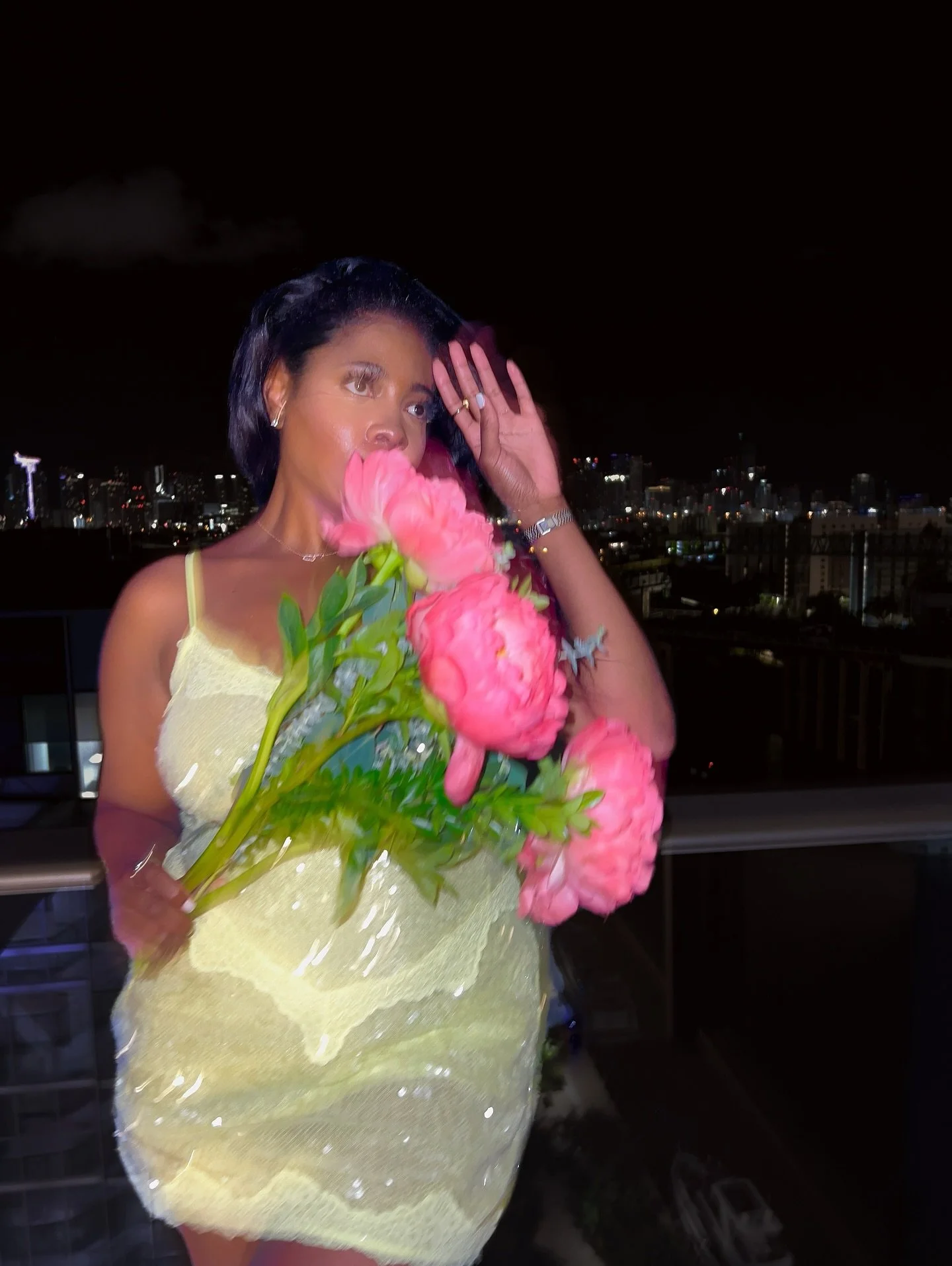
First off, do you know your Big 3 (Sun, Moon, Rising)? I have got to know what you’re cooking with.
Ha! I’ll do you one better — not only do I know my Sun, Moon and Rising, I know the whole kit and caboodle!! Not to be obnoxious. But the Pattern I even consider like child’s play for me. I need to see lines, graphs, numbers, asteroids, degrees!!! No, but seriously, I’m so fanatical about astrology, best believe I was having my business chart read.
Anyways, I’m a Taurus Sun, Aries Moon and Libra Rising, which I think is a painfully accurate portrayal of me. I literally don’t care about anything in life besides being hot, smart, fun and rich.
This conversation is about a particular point in your career where you built up and burned down your business, The Established. But you’ve lived several lives before that, and I think that’s important context for the story. You were never on a linear career track. Can you tell us about the different jobs and industries you’ve orbited?
Looking back now, what do you think your particular career journey says about you, and do you think there was any foreshadowing about how you would eventually navigate founderhood?
It’s funny, I was just reflecting the other day about how when I turned 17 I applied to Abercrombie just to see if I was hot enough to work there. Thank God I got hired because I did not need another teenage insecurity!
I’ve done all kinds of things, some pretty shamefully, if I’m to be candid. Sometimes in hindsight I think about certain roles I had and I’m like I had no business doing that job. It’s how I feel about my real estate stint which was very spiritually Wolf of Wall Street.
I spent the earliest days of my career in the music industry (in PR) where we represented artists like Katy Perry and The Gorillaz; I also spent time in A&R before moving on to the first iterations of what would become social media marketing at WMG. After that, I had to pivot which led me to doing everything from writing freelance and copy editing medical literature, to retail, to cocktail waitressing and bartending and what feels like everything in between. I tested ride experiences for Uber until they fired me once they realized I wasn’t actually going on the rides I submitted my timesheet for, allegedly. When I decided to become an entrepreneur it was a pet company, then an idea for a real estate app before deciding to start my beauty business. I will say I’ve allowed myself to explore and exhaust many avenues.
My freelance writing era post-college is one that feels a little kismet in hindsight, now that I’m writing again and running Slutty Founder. If I’m honest, writing was always my first love, I just never thought it could make me rich before I was famous.
Perhaps like a lot of young people figuring it out, a lot of the roles I took on were rooted in scarcity and a desperation to support myself, which makes self-discovery that much more painful. I feel so badly that so many young people go through this and that it dictates their worth. When I look back on how I navigated the earlier days of my career I see a girl that was really afraid to trust her own giftedness and creativity. As for founderhood, I’m not sure if there was any foreshadowing about how I would navigate that area of my life as much as it indicated I would simply become a founder. I will say though, that instability my career journey provided, lent me a sense of comfort in delayed gratification which is necessary for the time you spend as a founder with it “not paying off.”
I talk about how, in a Self-Centered Career, desire and the meeting of one’s needs is actually the impetus of one’s work, not a lucky side effect. The projects we take on must be self-serving first.
In your essay, you spoke about how you realized that you had lost that desire (among many other things), and it had been replaced with pressure and obligation with little returns by way of providing the lifestyle you envisioned.
That became the catalyst for shutting down the business. It was your greatest act of re-centering yourself in the story of your career and your life. Now that you have done so, how do you think about the work you take on moving forward? What does it look like to keep your desires and needs centered? What’s non-negotiable for you?

Don’t get me wrong, The Established provided me a nice life, I think considering, but as my appetite for success grew and the distance between those long term goals became shorter as I became older, the stakes started to feel a lot higher. The question became, ‘what was I willing to do to get to the ultimate level of where I wanted to be?’ and the answer was: not this.
That question became my guide in navigating the next chapter of my career. I’m constantly checking in with myself and asking what work I really want to do. Is this something I could see myself committing to fully and authentically or am I doing it because I feel I need the money. I’m of the belief that desire and meeting your needs are actually deeply connected. Like I actually feel my calling in life is to just be my hedonistic self.
For me it’s simple: if it doesn’t light me up, I’m not doing it. If it doesn’t get my wheels turning in an exciting way, I’m not doing it. For me a traditional work structure is probably also not gonna happen. I’m just too creative and I like to dilly dally about in my day. I enjoy floating between being super heads down for hours on a project and going out to lunch and having a glass of wine writing in my e-journal. I like to do what I like to do when I want to do it and once I started accepting that about myself as a way of life instead of rejecting it, I think more aligned work started coming my way. My time freedom is just not something I can compromise because it’s also where I find a lot of my inspiration; in the mundane, on a long walk or a coffee run or out for a drink. Destiny’s Child said it best: ain’t no feeling like being FREE!!!!
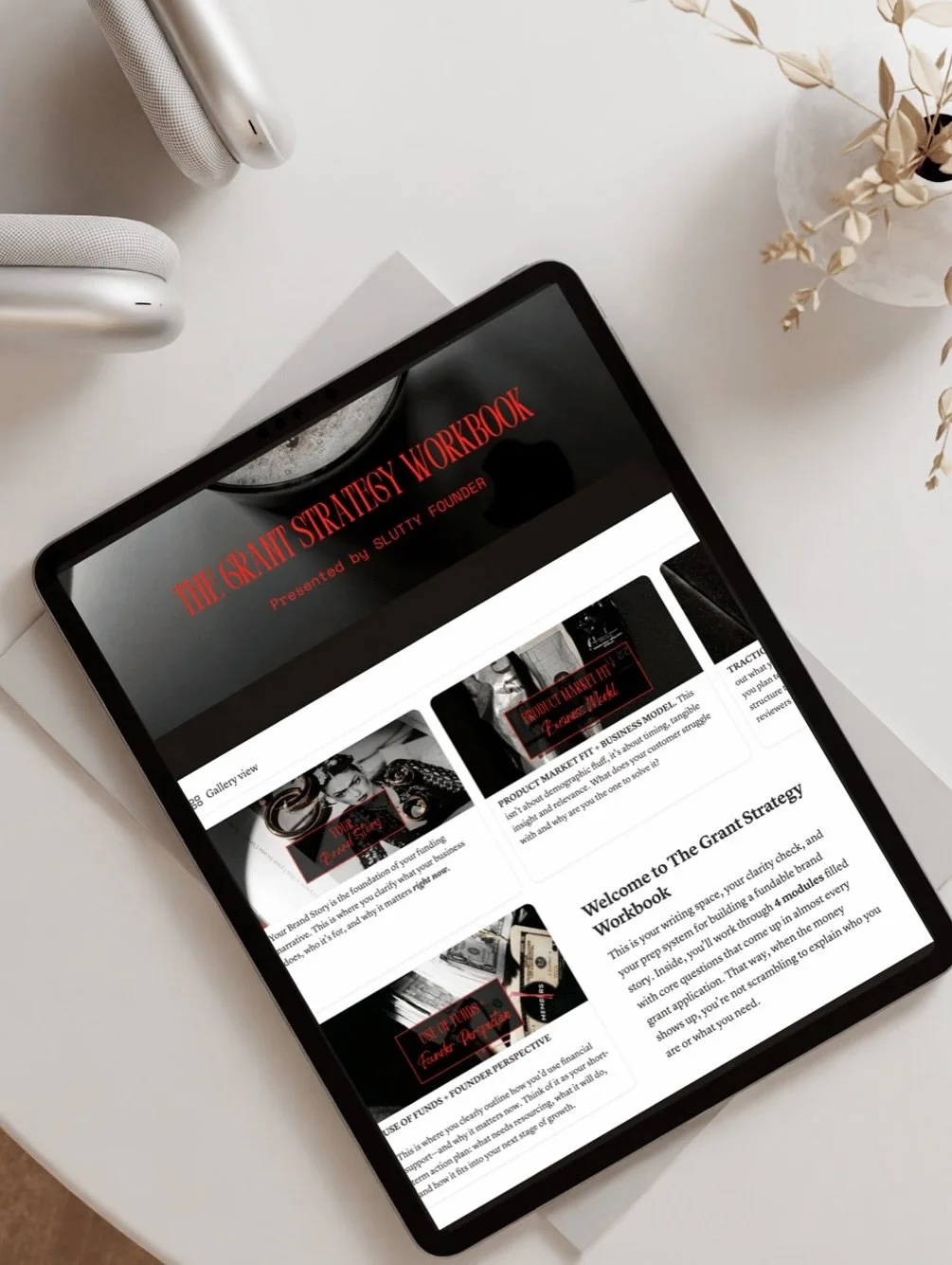
That first “Big Quit” — killing your darling — is like ripping a band-aid off. Once you realize that you only stand to lose by staying in past-peak projects for too long, you learn to metabolize your work more quickly. For example, you recently sunset your Grant Strategy Workbook in a much shorter timeframe than it took to close down The Established. What surefire signs have you learned to recognize that a project’s work is done and it’s time for you to move one?
For me it was misalignment between the project and the type of work I actually want to be known for. I only realized after putting it out there that I wasn’t trying to build a “digital product business” or be the person selling scalable templates at volume. The direction I’ve been moving towards is more high-touch, equity-level advisory work. I think the workbook felt like it belonged to a different version of me post Established. I feel like when a project is right, you usually feel more ideas multiplying around it and I just didn’t feel that way about grant strategy work I was doing.
I want to talk about expectations and disappointment. I think one of the things that can keep people bound to past-peak projects is when people still want things from them: they’re still making sales, receiving pitches, getting client inquiries, gaining clout, etc. It activates our desire to be needed and wanted. So they get continuously pulled back into the work, even though it’s no longer working for them.
The Established didn’t shut down because the business was failing by any means. When you announced you were closing it — and presumably your customer base begged you to not do so — what came up for you? How did you make peace with “disappointing” those customers who still loved your products?
I’ve gotta be honest – I did not wrestle with feeling bad like that. Maybe I did at first, for what, like a day or two? The bigger feeling for me was just getting this monkey off my back, sunsetting the business smoothly and capitalizing as much as I could off the drama of shutting down, while still honoring the people who had supported me for years.
I’m the type of person that when I’m done, I’m DONE. There’s nothing anyone can say to guilt me into feeling differently. So the dominant feeling for me wasn’t disappointment or grief, it was relief. Just because people want something from you doesn't mean you're obligated to keep providing it and I think by that time in the business that was a lesson I had learned.
A big misconception about quitting or pivoting is that you have to start from ground zero in your next thing. The truth is almost always that you level up, although it doesn’t always look how one would expect (think: Rihanna pivoting from being a global pop star into founder of a billion dollar beauty company — two very different types of success, but by no means a step backward).
You leveraged quitting into new, revenue-generating and name-building work. When you shut down The Established, can you break down where your next paid opportunities came from? What value did those people (customers, clients, readers, etc.) see — what did they want your lens on?
Was any of that work already lined up? Did your exit plan include where you would land next, or did those ideas only come after the announcement?
When I shut down The Established, I transitioned almost immediately into consulting and brand strategy for other early stage beauty brands. I really didn't have some grand master plan. Again, at the time, my biggest priority was simply putting the business behind me, I figured the work ahead would teach me how to do it.
A few weeks after announcing the closure, I posted on Instagram that I was opening a handful of spots for early-stage beauty founders who wanted support building their brands. The post linked to a simple intake form, and the response was actually larger than I expected. I ended up taking nearly two months off before onboarding my first client, but that was the beginning of the advisory work I still do today. What started as founders asking for guidance kind of evolved into retainer-based strategy engagements focused on brand positioning, go to market strategy, and helping brands refine their messaging systems.
I think when you're heads down inside a business for years, it's easy to lose sight of what other people actually value about your experience. I had grown numb to my successes and didn't really view many of my accomplishments as particularly remarkable. But to the people who had followed my journey, building an award-winning beauty brand from $200, securing major press, and growing organically represented a skill set they wanted access to.
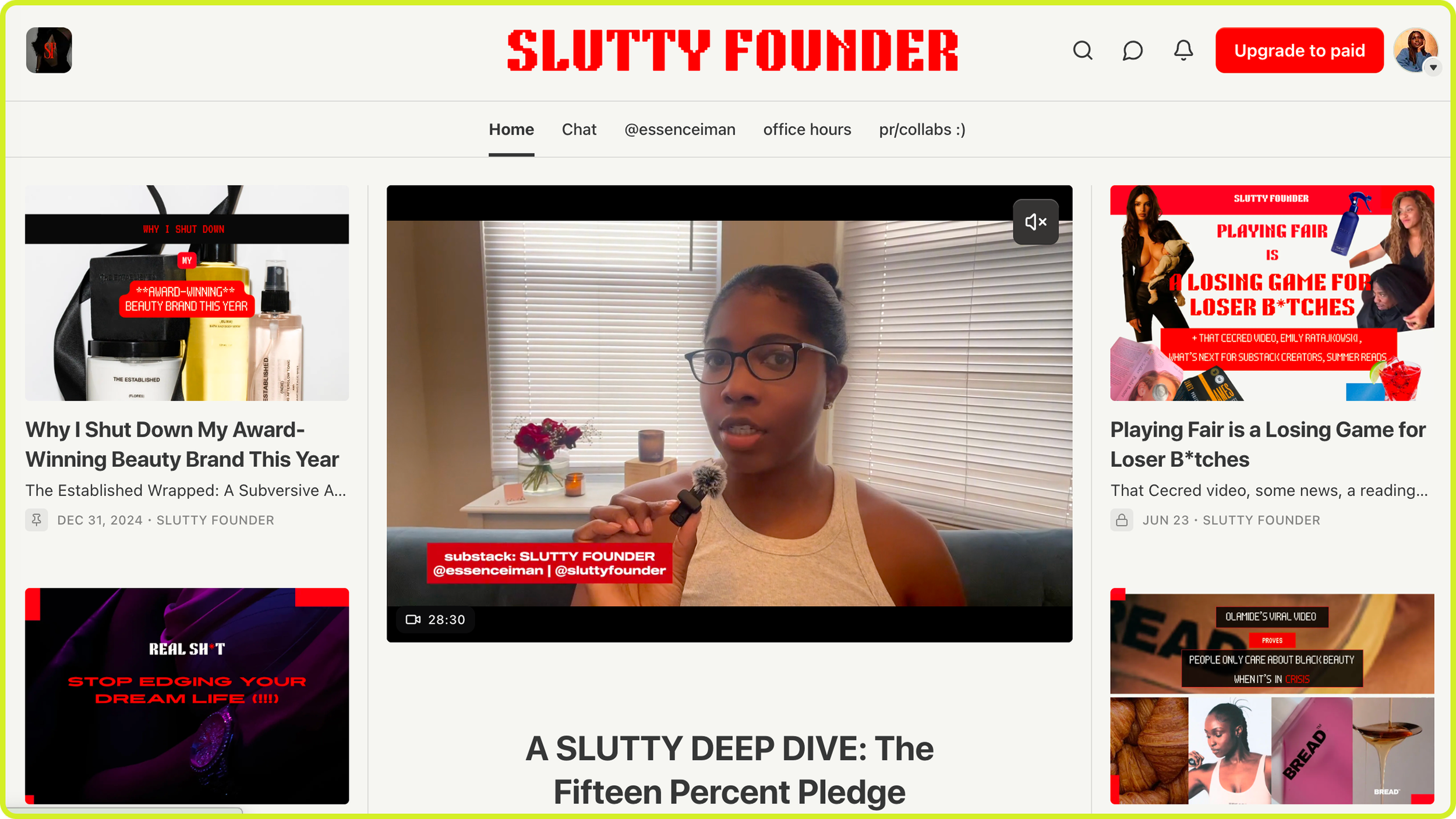
Around the same time I started Slutty Founder as a creative outlet to document what I'd learned as a founder and to write about the consumer brand moves I found worthy of note. I always intended it to be monetized, but I don’t think I realized it would become a legitimate revenue channel so quickly. I think the candor in which I speak is something people don’t necessarily get in a business or beauty space so that’s what my audience looks to my lens on. I’d say now continuing to build SF and my personal brand is what I spend the majority of my time doing today.
You recognized pretty early on the need to start building a brand for yourself that was inclusive of but not limited to being a beauty founder. You’ve also done an incredible job of standing behind and bringing visibility to the decisions you make. This has no doubt played a role in your ability to navigate the next phase of your career with more agency. Can you talk more about the strategic moves you made to position yourself well post-exit?
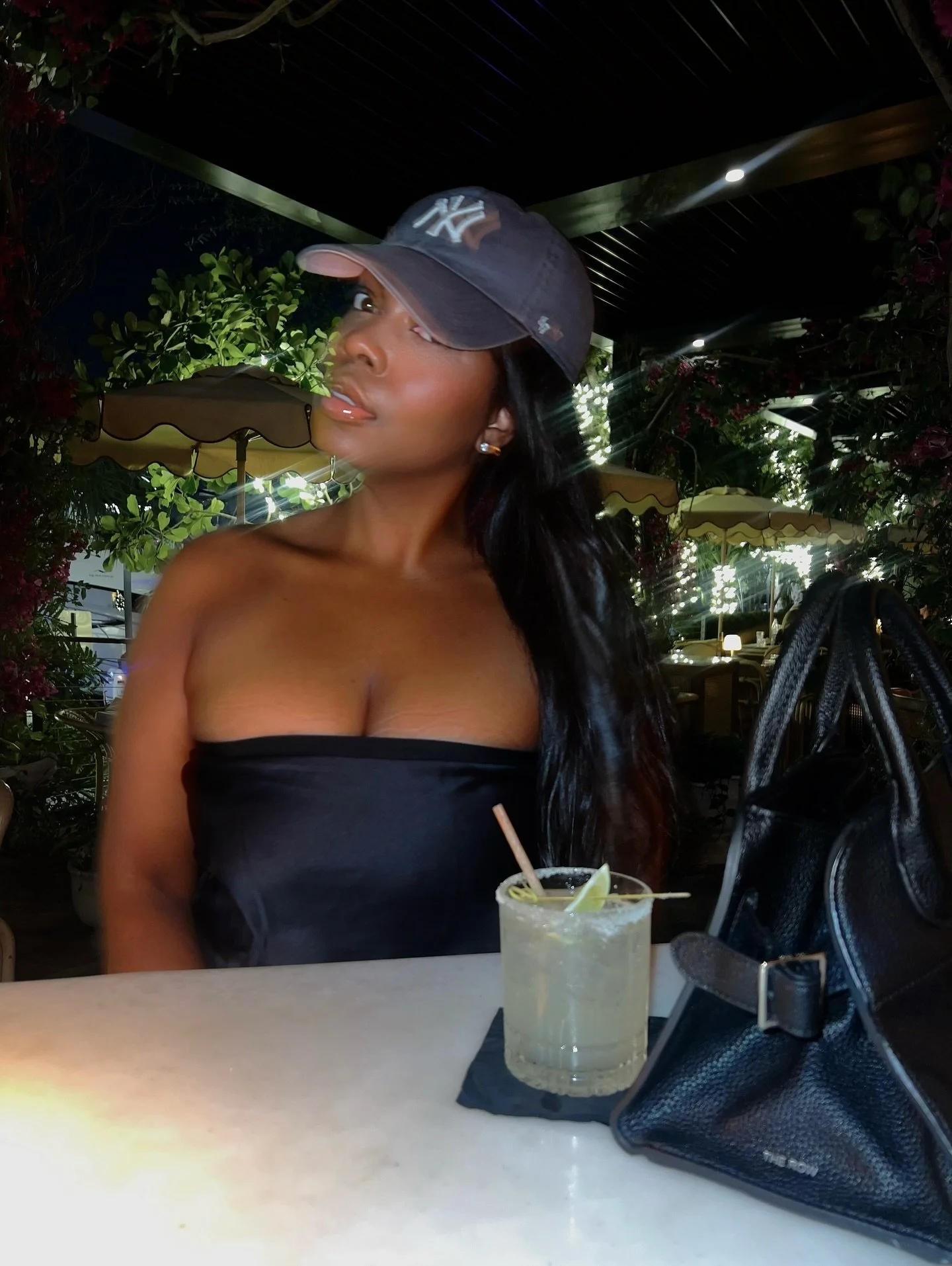
I think the biggest strategic move I made post-exit was giving myself permission to be seen as more than a founder.
During The Established, I was incredibly focused on building the business itself. I didn't really think of myself as a creator, writer, or artist if anything, I was hiding behind the brand.
After I shut the company down, I started creating content more as a personal challenge. I was kind of icked out initially at this thought of becoming a content creator, but at the same time getting comfortable with expressing myself publicly felt like a skill I needed to develop. I think the professional value was a byproduct of that, and while today content serves as a discovery tool for my work it was a secondary intention. The original intention was just to get comfy with expressing myself because at the end of the day I see myself as an artist, a writer and adjacent to celebrity. I said it! My personal brand really just feels like an acknowledgement of who I am.
I’ve never believed in being a volume creator, especially as I’ve become known to have such a raw and unique POV - I find my audience responds more to conviction than the actual cadence. I don’t feel a pressure to weigh in on EVERYTHING. I think this has primed my audience to anticipate my takes even more, because they know if I’m showing up with that green screen and 2x speed, it’s because I’m actually prepared to add something to the conversation. I've also become much more comfortable saying the thing everyone is thinking but nobody wants to say out loud. Earlier in my career, I was far more cautious about that, because I’m no longer a public facing founder I don’t feel the pressure to be.
Ironically, being willing to voice uncomfortable observations has attracted exactly the kinds of people I respect most. Some of my most engaged readers and followers are people you would genuinely GAG if you knew they were following me. I still gag! That’s what kind of validates to me, like okay–don’t police what you have to say, your voice is the asset.
You recently wrote on Threads: “Shutting your business down is a pathway to some of the most money you’ll ever make and some of the most support you’ll ever have.”
This is true in many literal ways — a sudden closure creates urgency for customers and spikes last-minute sales, people respond to “sob stories” and are eager to be the saviors who give you your next big break, and you get a ton of visibility because everyone loves a spectacle.
But I can also see this statement being true from a personal development standpoint. Releasing what you’ve outgrown is akin to pruning a tree — although it sounds counterintuitive, it actually leads to more and better growth down the line. I’d love to hear your take on this: Along with the business, what did you prune inside of yourself that has encouraged your expansion?

Haha yes. I’ve been “pruning” a lot from my old belief system. The Established was created by a version of me that believed I had to work incredibly hard in exchange for money and that if something was going to be financially successful, it needed to be practical, rational and impressive on paper. I also carried a lot of beliefs around proving myself and earning my place, which today I just don’t believe at all. It goes back to my belief in hedonism, and as a double Venus I really think the cheat code for me is to simply allow myself to indulge in the things that I enjoy!
I had to learn to get comfortable with just being myself and knowing that people find value in me being myself. This concept was so foreign to me in the years prior. I’m the type of person who would get on a Zoom and really feel like I had to over do it, overimpress! Like you’re telling me people just like me for me, and the silly shit I say and for what lives in my head? People don’t just respect me for my products, they respect how I view the world and I have allowed myself to realize it can just be that simple.
In my case, closing the business forced me to confront the possibility that life could be bigger, stranger, more creative, and more supported than I had previously allowed myself to envision. And more fun!
Okay, final question: what is newly sparking your curiosity these days?
Lately, I’ve been thinking a lot about how brands are becoming the framework for our culture and personal identities, which is kind of eerie, but has been really fun to write about. I’m working on a really big deep dive on this which will be found over on Slutty Founder, likely by the time this is live.
CONNECT WITH ESSENCEInstagram | @essenceiman
Substack | @sluttyfounder
Consulting | services website
The Exit Interviews
The Exit Interviews is a collection of conversations with multi-hyphenates who have publicly “killed their darlings” — i.e. quit major career projects in order to make space for their own evolutions. These interviews unpack the strategy behind those decisions and show us what’s possible when we embrace endings in our careers.
This series is being released in preparation for Kill Your Darlings, a 2-week summer challenge for multi-hyphenates who need to prune their career portfolios and release past-peak projects. In a guided experience, participants will create their own Sunset Plans to thoughtfully end these projects and use them as leverage for what’s next.
Doors open July 2026, join the waitlist today to get early access to registration and more goodies leading up to kickoff!
DOORS OPEN JULY 2026KILL YOUR
DARLINGS
🔪
🌻